URL: https://postharvestreport.com/field-notes/softrim-vs-t2-marvel
What we learned comparing Softrim to T2 + Marvel | Keirton Field Notes
A July 2026 head-to-head at a licensed Pennsylvania producer: Softrim averaged 68.0% flower recovery, T2 + Marvel 77.0%, with eleven more points of A grade.
Field Note · 2026
What we learned comparing Softrim to T2 + Marvel.
By Jay Evans, CEO, Keirton Inc., August 15, 2026 · 8–10 min read
We manufacture competing equipment, so don't take our opinion at face value. We didn't either. We tested it.
Why we tested Softrim
It's easy to understand why people like Softrim when they first see it run. It's quiet, mechanically simple, and it can remove leaf very quickly. Softrim makes some big claims around that: high flower yield, very low labor, better preservation of the flower and even increased THC.
In July 2026, we compared Softrim directly against a T2 running with Marvel as the intelligent layer at a licensed Pennsylvania producer. The equipment investment between the two approaches is roughly comparable, which makes it a useful comparison for a commercial operator.
The numbers
We ran four cultivars from the same facility using material from the same lots and batches, the same operator, the same QC weight and a comparable finishing process. Softrim averaged 68.0% flower recovery. T2 + Marvel averaged 77.0%.
| Cultivar | Softrim | T2 + Marvel |
|---|---|---|
| Jet Fuel | 64.4% | 73.2% |
| Strawberry Banner | 71.6% | 77.8% |
| Chya | 70.4% | 81.4% |
| Mast | 65.6% | 75.4% |
| Average | 68.0% | 77.0% |
On the three cultivars where grading was recorded, Softrim averaged 53.7% A flower and T2 + Marvel averaged 64.7%. On the two cultivars where we measured large flower, big-flower share within A went from 11.9% with Softrim to 22.6% with T2 + Marvel. Counting the flowers required to make up a half-kilogram sample, the number of individual flowers fell by 43.8% on one cultivar and 31.9% on the other: same weight, substantially larger flowers.
A good-looking bud can still represent lost value
If one large flower goes into a machine and comes out as two or three smaller, good-looking flowers, each piece can still look great. You've still changed the grade. A flower is worth more than B flower, often by up to 2x in mature markets. The question that matters is what happened to the value of the entire batch.
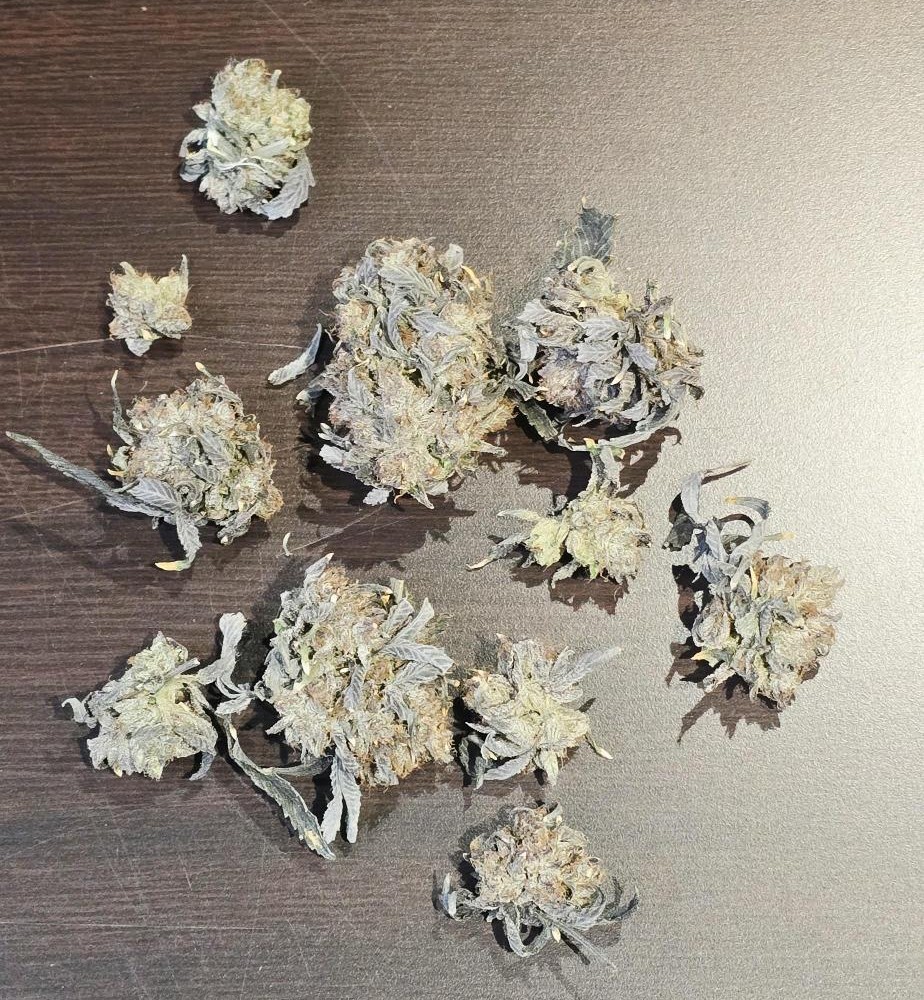
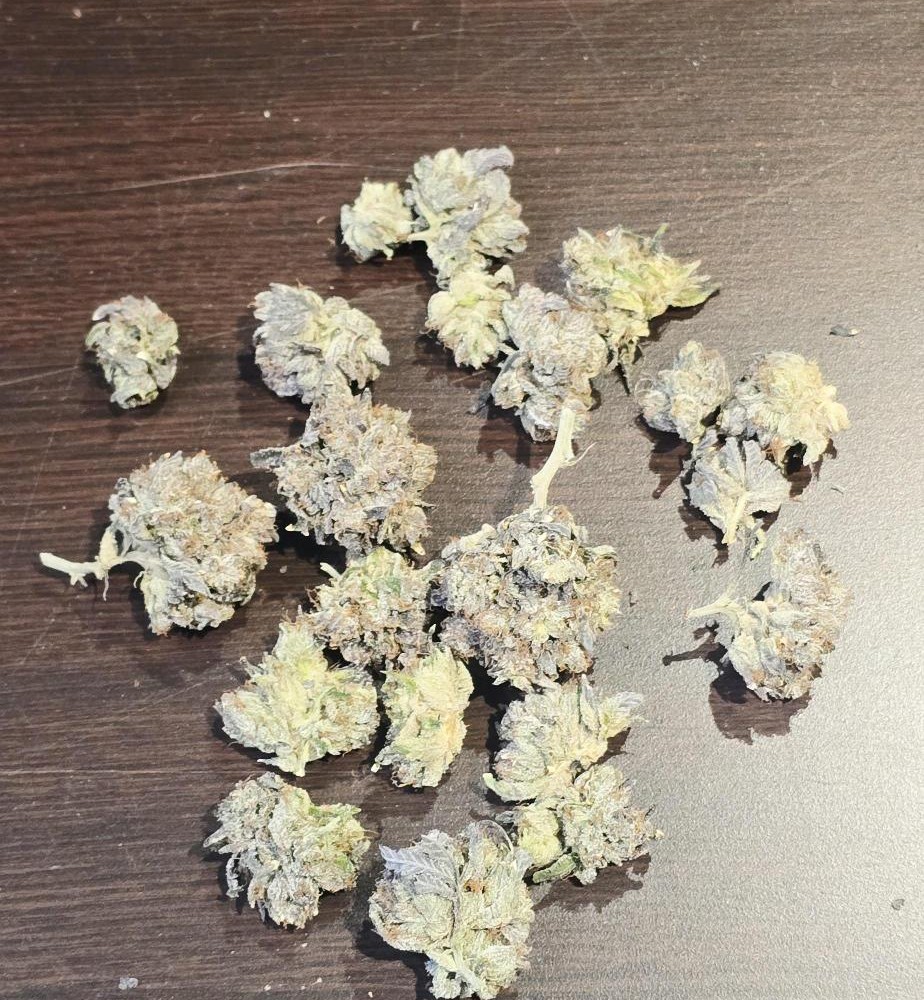
Softrim is simple. The process around it isn't.
Softrim relies on silicone fingers physically breaking leaf away from the flower, so the leaf has to be brittle enough to snap instead of bend. Run the flower a little too wet and the leaves flex, pushing the job into additional passes or hand finishing. Push it too far the other way and the flower itself becomes brittle. Flower constantly exchanges moisture with the air around it, so room conditions, cultivar, flower size and machine adjustment all move the result. That is a much narrower operating window than people assume after watching a demo.
Machine speed isn't process speed
The crop still has to be defoliated, dried, bucked, run through the machine, finished, destemmed where necessary (Softrim does not trim stems, it tends to create more in the breakdown of A flower), regraded and QA'd. At the Pennsylvania facility we observed hand finishing at around two pounds per labor hour per person. Finished A-grade pounds per total labor hour matters far more than seconds inside the trimmer.
The variability matters
Softrim recovery in our test ranged from 64.4% to 71.6%, more than seven points of movement across four cultivars from one facility during one week and one dry cycle. Four cultivars do not tell us what Softrim will average everywhere, but a single headline yield number is not enough to evaluate the technology.
What about increased THC?
Across more than 100 tests performed internally and by customers, we've generally seen trimming-method differences of roughly plus or minus one percentage point in potency. At that level it is very difficult to separate a trimming effect from normal sampling and laboratory variation. Prove it with split lots from the same material, representative samples, the same lab, and enough repeats that the difference is obvious.
Marvel changes the comparison
Softrim depends on getting the flower into the physical condition where its mechanical approach works well. T2 still does the physical trimming, and Marvel gives visibility into the outcome so the process can be adjusted around recovery and grade. In our test, T2 + Marvel recovered nine more points of flower, eleven more points of A grade and roughly twice as much large flower where we measured it.
Measure the whole pound
You can increase a yield number simply by leaving more material attached to the flower. That doesn't make it more valuable. What matters is the economic value recovered from the harvested pound: how much ended up as large A flower, how much became B, how much became smalls or trim, and how much labor it took. Run the comparison yourself: same harvest, split lots, consistent finishing standard, and measure everything after final QC rather than at machine exit.
FAQ
- How did Softrim compare to T2 + Marvel on flower recovery?
- In a July 2026 side-by-side at a licensed Pennsylvania producer across four cultivars from the same lots, Softrim averaged 68.0% and T2 + Marvel averaged 77.0%, with T2 + Marvel higher on all four cultivars.
- Does Softrim protect A-grade flower?
- In this test, no. Softrim averaged 53.7% A flower against 64.7% for T2 + Marvel, and big-flower share within A averaged 11.9% versus 22.6%.
- Does eliminating blades increase THC?
- No evidence of a material effect. Across more than 100 tests, trimming-method potency differences run roughly plus or minus one percentage point, inside normal sampling and lab variation.
- Why is machine cycle time a poor way to judge a trimming system?
- Because defoliating, drying, bucking, finishing, destemming, regrading and QA all consume labor. Hand finishing at the test facility ran about two pounds per labor hour per person.
- How should an operator run their own trimmer comparison?
- Same harvest, split lots, consistent finishing standard, both vendors present, and every measurement taken after final QC rather than at machine exit.